Achieving your ideal body shape can sometimes feel challenging, even with regular exercise and a balanced lifestyle. Stubborn areas of fat may remain resistant to diet and physical activity, and changes in body shape can occur due to aging, genetics, lifestyle, and natural changes in the body.
This is where modern body contouring treatment options may help.
Advances in aesthetic medicine have introduced a range of treatments designed to target specific areas and improve body contours without necessarily requiring traditional surgery. Non-surgical body sculpting has become an increasingly popular option for individuals looking for minimally invasive or non-invasive approaches to body shaping.
From fat reduction technologies to muscle-toning procedures, modern treatments offer different approaches depending on an individual’s goals.
This guide explores body sculpting for fat reduction, available treatment options, potential benefits, and what you can expect when considering a professional body sculpting treatment.
Important Note: Body sculpting treatments are aesthetic procedures and are not a substitute for weight-loss treatment or a healthy lifestyle. Results vary between individuals, and suitability should be determined through a professional consultation.
What Is Body Sculpting Treatment?
A body sculpting treatment refers to aesthetic procedures designed to improve the shape and contour of specific areas of the body.
Depending on the treatment technology, body sculpting may aim to:
- Reduce localized fat
- Improve body contours
- Target stubborn areas
- Support muscle definition
- Improve overall body proportions
There are both surgical and non-surgical approaches to body sculpting.
Today, many people are interested in non-surgical body sculpting because these treatments may offer alternatives with little to no surgical downtime, depending on the procedure.
However, every treatment works differently, and results can vary based on the technology used and the individual’s body.
What Is Non-Surgical Body Sculpting?
Non-surgical body sculpting refers to treatments that use specialized technologies to target specific areas of the body without traditional surgical procedures.
Depending on the technology, treatments may use:
- Controlled cooling
- Radiofrequency energy
- Ultrasound technology
- Electromagnetic energy
- Laser-based technology
These technologies are designed for different purposes and may work differently depending on the treatment area and clinical objective.
A qualified provider can help determine which option may be appropriate based on your individual goals and medical history.
How Does Body Sculpting for Fat Reduction Work?
Body sculpting for fat reduction generally focuses on localized areas of fat that may be resistant to lifestyle changes.
Different technologies use different mechanisms to target fat tissue.
For example, certain treatments may use controlled temperatures or energy-based technologies designed to affect targeted cells.
The body’s natural processes may then gradually respond over time.
It is important to understand that body sculpting is generally not designed as a solution for significant weight loss.
Instead, it may be considered by individuals looking to address specific areas of concern.
Common Areas Treated With Body Sculpting
Depending on the treatment technology, body sculpting may be used to target areas such as:
- Abdomen
- Waist
- Flanks
- Thighs
- Arms
- Back
- Chin area
- Other localized areas
The suitability of treatment depends on the individual and the specific technology being considered.
A professional consultation can help identify realistic treatment options.
Types of Body Contouring Treatment Options
Modern aesthetic clinics may offer several different body contouring treatment technologies.
Understanding the differences can help patients have more informed conversations during a consultation.
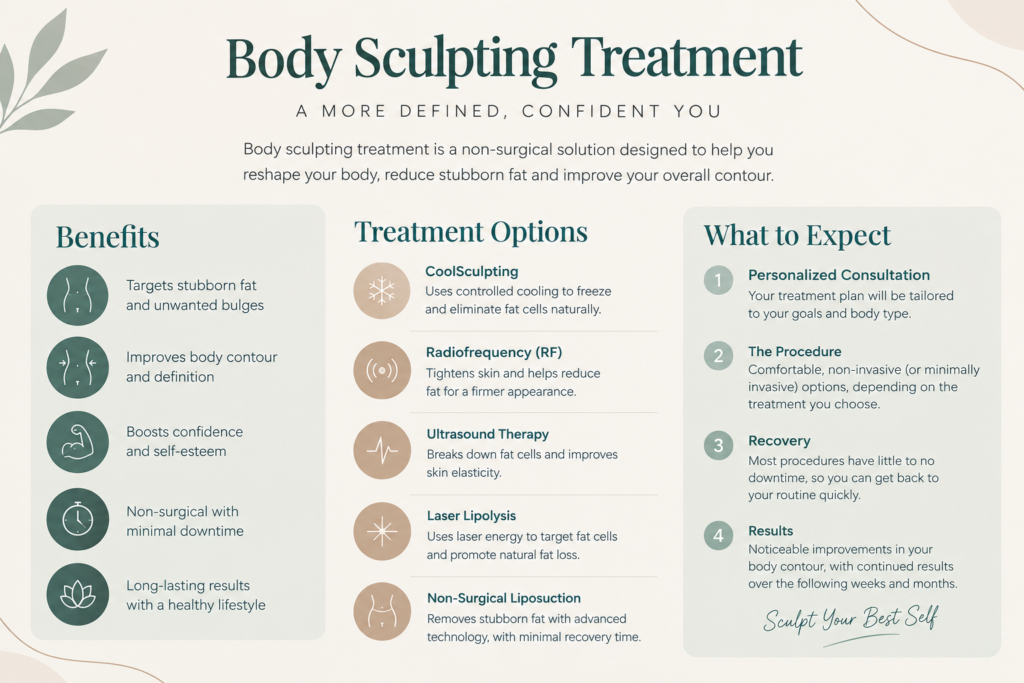
1. Cryolipolysis and Controlled Cooling Treatments
Some body contouring technologies use controlled cooling to target localized fat cells.
These treatments are generally non-invasive and may be used for specific areas of concern.
During the procedure, an applicator is placed on the targeted area.
The exact treatment experience and recovery expectations depend on the specific device and protocol.
Results may develop gradually rather than appearing immediately.
2. Radiofrequency Body Contouring
Radiofrequency-based treatments use energy to heat targeted tissues.
Depending on the treatment, radiofrequency technology may be used in aesthetic procedures designed to support body contouring and skin appearance.
Some individuals may consider these treatments when their goals include improving the appearance of certain areas.
Treatment protocols vary depending on the technology and provider.
3. Ultrasound-Based Treatments
Certain body sculpting technologies use ultrasound energy.
These treatments may be designed to target specific tissue layers depending on the device and clinical application.
A professional provider can explain how a particular technology works and whether it is appropriate for your goals.
4. Electromagnetic Muscle Stimulation
Some modern body sculpting technologies focus on muscle stimulation and definition.
These treatments use electromagnetic energy designed to stimulate muscle contractions.
They may be considered by individuals interested in complementing their fitness routine and improving muscle definition in selected areas.
However, these treatments are not a replacement for regular exercise.
5. Laser-Based Body Sculpting
Laser technologies are also used in certain aesthetic body contouring procedures.
Different laser systems have different applications.
Treatment suitability, expected outcomes, and recovery requirements depend on the specific procedure.
A qualified practitioner can explain the available options and potential benefits.
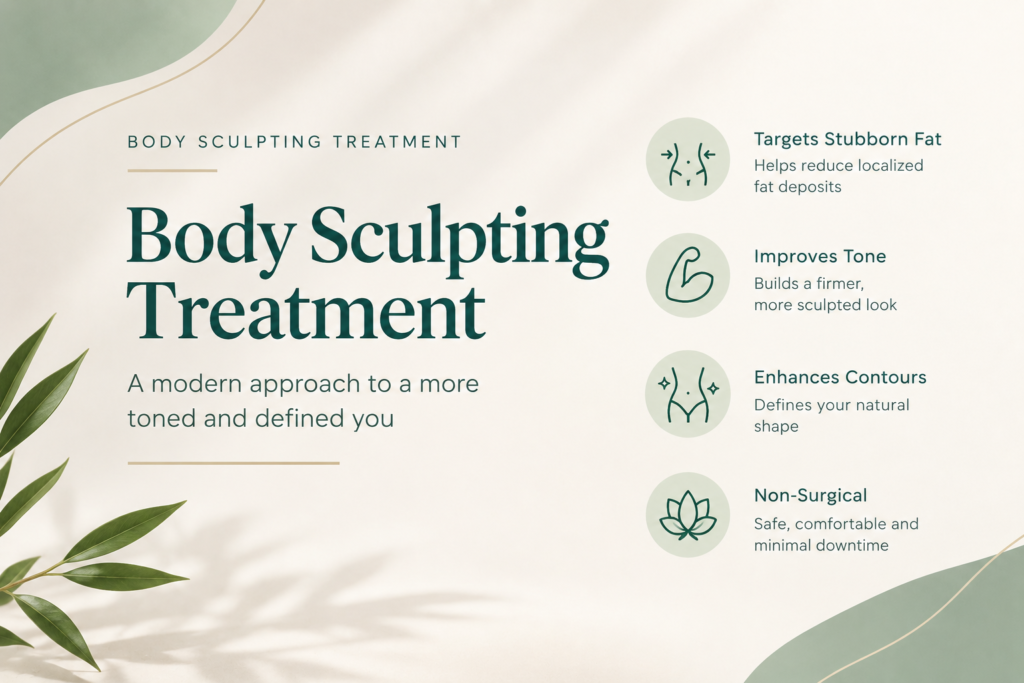
Benefits of Non-Surgical Body Sculpting
The potential benefits of non-surgical body sculpting depend on the treatment selected and individual circumstances.
Some possible advantages may include:
Targeting Specific Areas
Body contouring treatments may focus on localized areas that concern an individual.
This allows for a more targeted approach compared with general weight-loss strategies.
Minimal Downtime
Many non-surgical procedures may involve little downtime compared with traditional surgery.
However, recovery expectations vary depending on the treatment.
Patients should always follow their provider’s aftercare instructions.
Non-Invasive Treatment Options
Many modern body sculpting procedures do not require surgical incisions.
This can make certain treatments appealing to individuals who are not interested in surgical procedures.
Personalized Treatment Plans
Body shape and aesthetic goals are different for every person.
A professional consultation can help develop a treatment plan based on factors such as:
- Treatment area
- Body composition
- Individual goals
- Medical history
- Lifestyle
Personalized planning is important for setting realistic expectations.
Body Sculpting vs Weight Loss: Understanding the Difference
One of the most common misconceptions is that body sculpting and weight loss are the same thing.
They serve different purposes.
Weight Management
Weight management focuses on overall body weight and health.
This may involve:
- Nutrition
- Physical activity
- Lifestyle changes
- Medical support
Body Sculpting
Body sculpting generally focuses on improving the appearance and contour of specific areas.
It is typically considered an aesthetic treatment rather than a replacement for comprehensive weight management.
Individuals considering treatment should have realistic expectations about what body contouring can and cannot achieve.
Who May Be a Suitable Candidate for Body Sculpting?
Suitability depends on several factors.
A professional consultation is important before undergoing any aesthetic procedure.
A provider may consider:
- Overall health
- Treatment goals
- Body composition
- Medical history
- Current medications
- Expectations
Individuals should be open and honest about their medical history during consultations.
Not every treatment is suitable for every person.
What to Expect During Your Consultation
A professional consultation is an important first step.
During the appointment, your provider may discuss:
Your Goals
Explain which areas you would like to address and what changes you hope to achieve.
Treatment Options
Your provider may explain the available technologies and approaches.
Medical History
Certain health conditions or medications may affect treatment suitability.
Expected Outcomes
A responsible provider should discuss realistic expectations.
Treatment Plan
Depending on your goals, you may receive recommendations regarding the number and type of sessions.
Never feel pressured to begin treatment without understanding the procedure and available alternatives.
What Happens During a Body Sculpting Treatment?
The treatment process depends on the specific technology used.
Generally, a typical appointment may involve:
- Reviewing the treatment area
- Preparing the skin
- Positioning the treatment device
- Performing the procedure
- Providing aftercare instructions
Treatment duration can vary depending on the procedure and area being treated.
Your provider should explain what sensations you may experience before beginning.
Does Body Sculpting Hurt?
Comfort levels vary depending on the technology and individual sensitivity.
Some people may experience sensations such as:
- Cooling
- Warmth
- Pressure
- Muscle contractions
- Mild temporary discomfort
The experience depends on the treatment.
Your provider should explain what to expect and discuss any concerns before the procedure.
How Long Does It Take to See Results?
Results from body sculpting for fat reduction can vary.
Some treatments involve gradual changes that may develop over several weeks or months.
Factors that can influence outcomes include:
- Type of treatment
- Treatment area
- Individual body composition
- Number of sessions
- Lifestyle factors
Avoid clinics that guarantee identical results for every individual.
A professional provider should discuss realistic expectations based on the specific treatment.
How Many Body Sculpting Sessions Will You Need?
The number of sessions depends on several factors.
Some individuals may require a series of treatments, while others may have different recommendations depending on the technology used.
Factors may include:
- Treatment goals
- Area being treated
- Type of technology
- Individual response
Your provider can recommend an appropriate treatment schedule following an assessment.
What Is Recovery Like After Non-Surgical Body Sculpting?
One of the reasons non-surgical body sculpting is popular is that many procedures involve minimal downtime.
Depending on the treatment, individuals may be able to return to normal daily activities relatively quickly.
However, temporary effects may occur.
These can vary depending on the procedure and may include:
- Redness
- Swelling
- Tenderness
- Temporary sensitivity
- Bruising
Always follow the aftercare instructions provided by your healthcare or aesthetic professional.
How to Maintain Your Body Sculpting Results
Maintaining results may depend on the treatment and individual lifestyle.
A healthy routine can support overall wellbeing and help maintain body composition.
Consider focusing on:
Balanced Nutrition
Avoid extreme diets and focus on sustainable eating habits.
Individual nutritional needs vary.
Regular Physical Activity
Movement supports general health and fitness.
Choose activities appropriate for your fitness level.
Hydration
Maintaining adequate hydration supports general health.
Consistency
Long-term habits are generally more sustainable than short-term changes.
A body sculpting procedure should be viewed as part of a broader approach to maintaining overall wellness.
Potential Risks and Side Effects
All aesthetic procedures involve potential risks.
The specific side effects depend on the technology and treatment.
Possible temporary effects may include:
- Redness
- Swelling
- Tenderness
- Bruising
- Temporary numbness
- Skin sensitivity
More serious complications may be possible depending on the treatment.
A qualified provider should discuss the specific risks associated with the procedure you are considering.
If you experience severe or unexpected symptoms, seek appropriate medical advice.
Questions to Ask Before Choosing a Body Sculpting Treatment
Before booking a procedure, consider asking:
- Which treatment technology do you recommend and why?
- Am I a suitable candidate?
- What results are realistic for my body and goals?
- How many sessions might be required?
- What side effects should I expect?
- Is there any recovery time?
- What are the risks associated with this treatment?
- How should I prepare?
- What aftercare will be required?
Clear communication can help you make a more informed decision.
Choosing the Right Body Contouring Treatment Provider
The quality of the provider is an important consideration.
When researching a clinic, look for:
- Qualified professionals
- Appropriate experience
- Clear consultation process
- Transparent communication
- Realistic expectations
- Patient safety standards
A responsible clinic should prioritize patient safety rather than making unrealistic promises.
At Dr. Shay’s Wellness Clinic, patients can explore professional aesthetic and wellness services through a personalized consultation process designed around individual concerns and goals.
Body Sculpting Treatment: Is It Right for You?
A body contouring treatment may be worth considering if you are interested in addressing specific areas and understand the realistic limitations of aesthetic procedures.
However, the right treatment depends on your individual circumstances.
There is no universal solution for body shape or appearance.
A consultation with a qualified professional can help you understand:
- Available treatment options
- Potential benefits
- Possible risks
- Expected recovery
- Realistic outcomes
Taking the time to research and ask questions is an important part of making an informed decision.
Final Thoughts
Modern non-surgical body sculpting offers a range of options for individuals interested in improving body contours without traditional surgery.
From energy-based technologies to treatments focused on body sculpting for fat reduction, different approaches are available depending on individual goals and treatment areas.
However, body sculpting should not be viewed as a replacement for weight management, exercise, or a healthy lifestyle.
The best approach begins with realistic expectations and a professional consultation.
A qualified provider can help determine whether a particular body contouring treatment is appropriate and develop a personalized plan based on your goals, health, and lifestyle.
Frequently Asked Questions
What is body sculpting treatment?
Body sculpting treatment refers to aesthetic procedures designed to improve the shape and contour of specific areas of the body. Different technologies may target localized fat, muscle definition, or other aesthetic concerns.
Is non-surgical body sculpting safe?
Safety depends on the specific procedure, technology, provider qualifications, and individual medical circumstances. A professional consultation is necessary to determine whether a treatment is appropriate.
Is body sculpting the same as weight loss?
No. Body sculpting generally focuses on improving the appearance and contour of specific areas, while weight management focuses on overall body weight and health.
How does body sculpting for fat reduction work?
Different technologies use different approaches, such as controlled cooling or energy-based treatments, to target localized areas. The exact mechanism depends on the procedure.
How long does it take to see body sculpting results?
Results vary depending on the treatment and individual. Some procedures may produce gradual changes over several weeks or months.
Does body sculpting require surgery?
Not always. Many non-surgical body sculpting treatments are available that do not involve traditional surgical procedures.
How many sessions of body contouring treatment are needed?
The number of sessions depends on the treatment technology, treatment area, individual goals, and response. A provider can recommend a personalized treatment plan.
Can body sculpting replace exercise?
No. Body sculpting should not be considered a replacement for physical activity or healthy lifestyle habits.