
You look in the mirror and see tired skin. Fine lines show up. Your glow feels gone. Creams promise a lot, but results feel slow. Many people then look for a gentler option than surgery.
A PRP face treatment is one option people often ask us about. It uses your own blood to support skin renewal. At DrShays.com, we share what we know so you can decide with clarity.
What Is a PRP Face Treatment?
PRP means platelet-rich plasma. Platelets are tiny blood cells that help your body heal. In platelet rich plasma therapy for face care, a small blood sample is taken from your arm. It is spun in a machine to separate the platelets. The concentrated plasma is then placed in the skin.
Because it comes from your own body, it is called an autologous treatment. Some people call it a PRP skin treatment. Others call it a PRP injection facial, based on how the plasma is applied.
How Does PRP for Face Work?
Platelets hold growth factors. These are natural signals that help tissue repair itself. Researchers believe these signals may encourage collagen and support skin renewal.
The science is still growing. A 2024 overview of systematic reviews on PRP for facial rejuvenation found the evidence is not yet strong enough for firm conclusions. We think you deserve to hear that. Good care starts with honest expectations.
PRP Facial Benefits: What People Hope to See
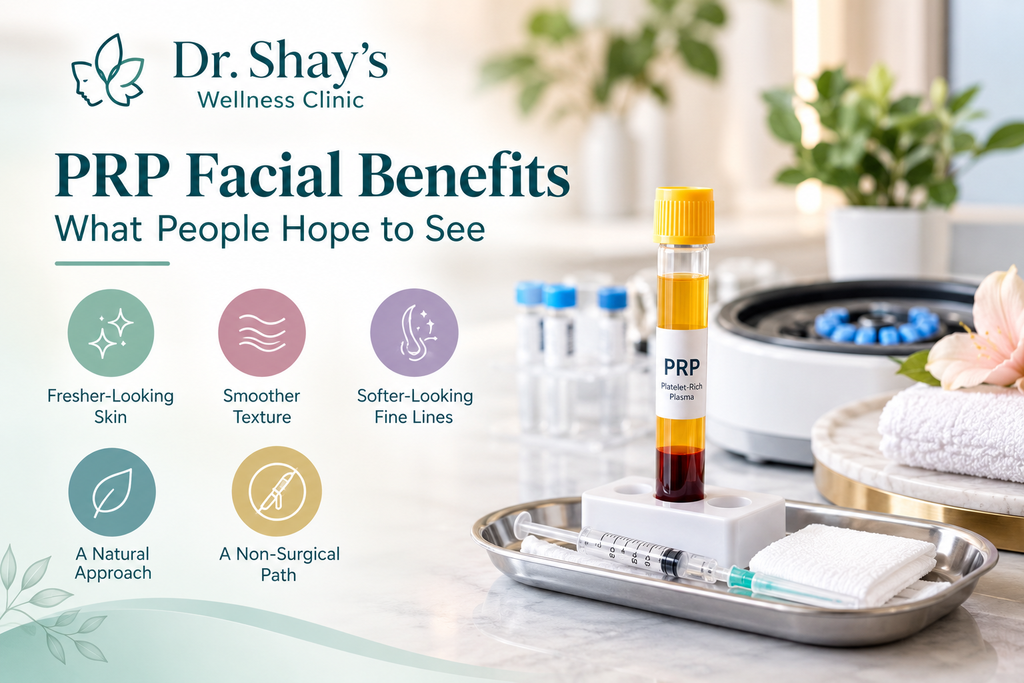
People choose PRP for face care for many reasons. Here are the benefits they most often ask about:
- Fresher-looking skin: Some hope for a brighter, more rested look.
- Smoother texture: Some want skin that feels softer to the touch.
- Softer-looking fine lines: Some want a gentler look around the eyes and cheeks.
- A natural approach: The treatment uses your own plasma, not a synthetic filler.
- A non-surgical path: You can skip surgery and its longer recovery.
Results vary from person to person. No provider can promise a set outcome.
Common Uses of a PRP Skin Treatment
A PRP skin treatment is often considered for:
- Early signs of aging
- Dull or tired-looking skin
- Uneven skin texture
- Skin around the eyes that looks thin or tired
At our clinic, we also offer Hydra Facials and anti-aging care. During your visit, you can talk about which option fits your skin best. Sometimes one treatment is enough. Sometimes a plan with more than one step makes sense.
What to Expect During a PRP Injection Facial
Knowing the steps can calm your nerves. Here is the usual flow:
- Consultation: We talk about your skin, health history, and goals.
- Blood draw: A small sample is taken, much like a routine blood test.
- Preparation: The sample is spun to separate the platelet-rich plasma.
- Application: The plasma is placed in the chosen areas of your face.
- Aftercare: You receive clear advice on how to care for your skin.
You may feel pinching or pressure. Your provider will explain comfort options before you begin.
Recovery and Possible Side Effects
Many people have mild effects after a PRP injection facial. These can include redness, swelling, tenderness, or small bruises. They often settle in a short time, but this varies.
Follow your aftercare advice closely. That may include sun care and avoiding harsh products for a while. Call your provider if you notice strong pain, spreading redness, or anything unusual.
Risks exist with any procedure. A careful review of your health history helps lower them.
Who May Be a Good Fit?
PRP for face concerns may suit adults who:
- Have mild to moderate skin concerns
- Prefer a non-surgical option
- Understand that results build slowly and differ for each person
- Can follow aftercare steps
Some people may need to avoid it. This can include those with certain blood conditions, active skin infections, or pregnancy. People who take blood thinners should speak with a provider first. A proper assessment comes before any treatment.
Why Choose Our PRP Face Treatment at DrShays.com?
Choosing a clinic is as important as choosing a treatment. At DrShays.com, we believe in clear talk and realistic goals. Our team at Dr. Shay’s Wellness Clinic in Islamabad reviews your skin and health history first. We explain the benefits, limits, and risks in plain words.
In our view, you should never feel rushed. Ask every question you have. A treatment plan should feel right for you, not for a sales target.
FAQs About PRP Face Treatment
1. Is PRP face treatment safe?
It uses your own blood, yet risks exist. Your provider will explain them.
2. How long does a PRP injection facial take?
Session length varies. Your provider will share the expected time during your consultation.
3. When will I see PRP facial benefits?
Changes, if any, appear gradually over weeks. Results differ from person to person.
4. Does PRP for face hurt?
You may feel pinching or pressure. Comfort steps depend on your provider’s plan.
5. How many sessions are needed?
The number depends on your skin goals and your provider’s advice after assessment.
6. Who should avoid PRP skin treatment?
People with certain blood or skin conditions, or pregnancy, may need to avoid it.
7. How should I prepare for a PRP injection facial?
Follow your provider’s advice, drink water, and share all medicines you take.
Is a PRP Face Treatment Right for You?
A PRP face treatment can be a thoughtful choice if you want a non-surgical way to care for tired skin. It works best with patience, realistic goals, and a provider who listens. At DrShays.com, we are happy to answer your questions. When you feel ready, you can book a consultation and talk through your options with us.
Medical disclaimer: This article is for general educational purposes only and does not replace professional medical advice, diagnosis, or treatment. Results and risks vary by procedure and individual. Consult a qualified healthcare professional before undergoing any PRP face treatment.