
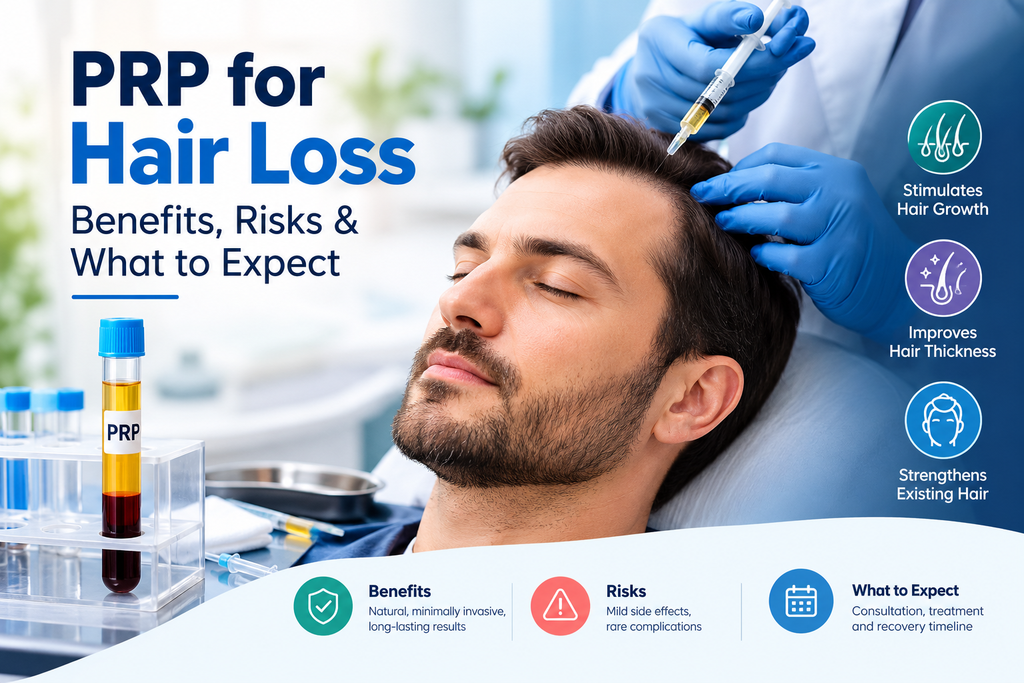
You brush your hair and see more strands than before. Your parting looks wider. Your ponytail feels thinner than last year. We hear these worries often, and we know how personal they feel.
Many people now ask about PRP for hair loss as a gentle option that uses the body’s own healing power. At DrShays.com, we want you to understand how it works before you decide. Below, we share what we know and who it may suit.
What Is Platelet-Rich Plasma (PRP) Treatment?
Platelet-rich plasma is made from your own blood. Platelets are tiny cells that help your body repair tissue. They carry growth factors that support healing.
In a PRP treatment, we draw a small amount of blood from your arm. A centrifuge spins it to separate the platelet rich plasma from other blood cells. We then place it in the areas of your scalp where hair is thinning.
Because it comes from you, there are no synthetic fillers or chemicals. Science is still catching up, though. A peer-reviewed review notes that PRP is widely used for hair loss, yet its exact way of working is not fully understood.
Who Uses PRP for Hair Loss?
People often ask us about PRP for hair loss when they notice:
- Thinning hair and a widening parting
- Early male or female pattern hair loss
- Shedding after stress, illness, pregnancy, or weight loss
Hair loss has many causes. Before treatment, Dr. Shayasta Mufti looks for treatable ones, such as low iron, thyroid problems, or vitamin gaps. We do this through our preventative healthcare checks. PRP works best when the root cause is also addressed.
Benefits of PRP for Hair Loss
Here is why many people consider this option:
- It uses your own blood. The risk of allergic reaction is very low.
- It aims to support existing follicles. The goal is to reduce shedding and improve hair thickness.
- Sessions are simple. We use numbing cream, so most people feel only mild discomfort.
- It is non-surgical. There are no incisions and no synthetic fillers.
Results vary from person to person. No treatment can promise a set outcome. Hair grows slowly, so patience matters.
What Happens During PRP for Hair Loss?
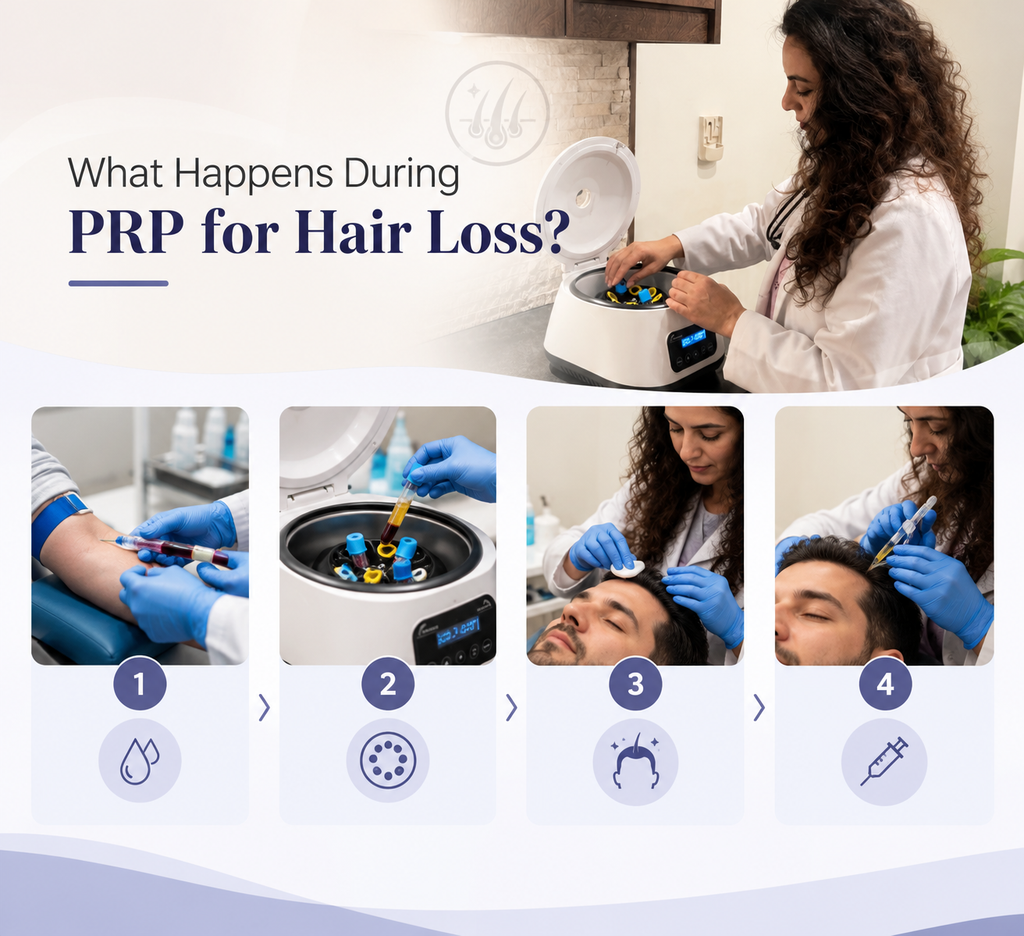
Your visit starts with a talk about your health history and goals. Dr. Shayasta Mufti, a certified physician from the American Board of Aesthetic Medicine, performs every treatment at our clinic. The steps are simple:
- Blood draw: We take a small sample from your arm, like a routine blood test.
- Separation: The blood spins in a centrifuge to collect the platelet-rich plasma.
- Preparation: We clean your scalp and apply numbing cream.
- Injection: We place the PRP into your scalp with very fine needles.
We use sterile, single-use equipment. Most people begin with three to four sessions, about four weeks apart. Maintenance sessions every few months may follow. Hair results usually take around three to six months to show.
Potential Risks, Side Effects, and Aftercare
PRP is generally well tolerated, but every treatment has risks. Mild redness, swelling, or tenderness is common for a day or two. Health sources also list bleeding, itching, bruising, and headache as possible effects.
For smooth healing, we suggest you:
- Follow our written aftercare instructions closely.
- Ask us when it is safe to wash your hair.
- Call us if pain or swelling gets worse.
Because PRP involves drawing and injecting blood, a qualified doctor should always perform it. At DrShays.com, we put safety and clear communication first.
Is PRP Treatment Right for You?
PRP suits many healthy adults, but not everyone. It may not be suitable if you have a blood or platelet disorder, an active infection, or a skin condition on the scalp. Certain cancers, blood-thinning medicines, and pregnancy also matter. Dr. Shayasta Mufti reviews your history before any PRP treatment.
You may be a good fit if you:
- Notice early thinning or shedding
- Want a non-surgical option that uses your own blood
- Are ready for several sessions and a few months of waiting
Ready to Take the Next Step?
Learn more on our PRP (Platelet-Rich Plasma) service page. You can visit us at 41A, Street 15, F-11/2, Islamabad. Call +92-300-377-4297 or use our contact page.
PRP for hair loss can be a calm, natural place to start. We believe the best choice begins with honest answers and a doctor you trust. So, book your consultation with us without any worry.
Frequently Asked Questions
1. How many PRP sessions will I need?
Most start with three to four sessions, four weeks apart, then maintenance every few months.
2. When will I see results?
Hair grows slowly, so results usually take around three to six months.
3. Is PRP treatment painful?
We apply numbing cream first, so most people feel only mild discomfort.
4. Is PRP safe?
Your own blood lowers allergy risk, and a trained doctor should always perform it.
5. Who may not be suitable for PRP?
It may not suit people with blood disorders, active infections, or pregnancy.
6. How much does PRP cost in Islamabad?
We offer various packages. Contact us for details that fit your needs.
7. Can PRP stop hair loss?
Results vary. PRP aims to reduce shedding and improve thickness, but no outcome is guaranteed.
Medical disclaimer: This article is for general educational purposes only and does not replace professional medical advice, diagnosis, or treatment. Results and risks vary by procedure and individual. Consult a qualified healthcare professional before undergoing any PRP treatment.